

 Over 25,000 cars purchased nationwide
How to Request an Offer for a Junk Car in Victorville
Start with your vehicle's make, model, year, Victorville-area ZIP code, and contact details in the quote form. If more information is needed, be ready to share its mileage, photographs, condition, title status, and exact parking location. A request starts an evaluation; it does not obligate you to sell.
- Describe the vehicle. Report whether it runs, the damage you know about, and any major parts that are missing.
- Review the evaluation. ByeCar can consider the information, ask follow-up questions, and discuss an offer if the vehicle is eligible. No offer amount is guaranteed.
- Check ownership documents. Confirm whose name is on the title, whether a lender has an interest, and whether the vehicle has salvage or nonrepairable status.
- Confirm the transaction. Before signing or releasing the vehicle, agree on the amount, payment method and timing, paperwork, collection arrangements, and any charges.
You can decline proposed terms. Do not assume pickup or payment arrangements are confirmed merely because a form was submitted.

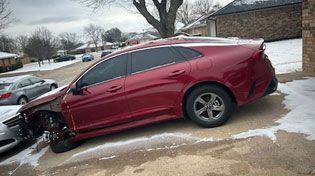
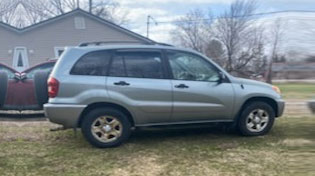
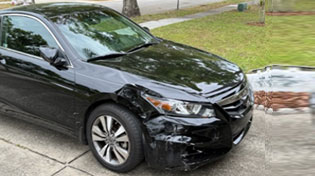
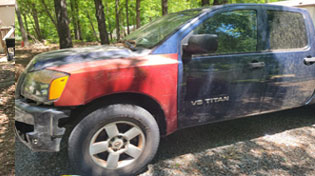
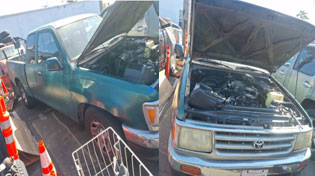

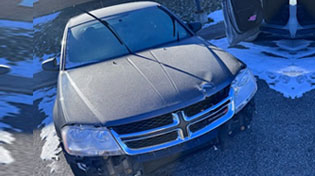
Junk, Damaged, and Non-Running Vehicles
ByeCar considers inquiries about unwanted passenger cars, SUVs, pickups, and vans. You can describe a vehicle with engine or transmission failure, collision damage, high mileage, rust, flood or fire exposure, or a long period out of use. Missing components, a salvage designation, or unresolved ownership issues may affect whether a transaction can proceed.
For a vehicle that does not start, explain whether it can roll, steer, shift into neutral, and be reached safely. Mention missing wheels, absent keys, locked brakes, or a removed engine or transmission. Accurate details help avoid a proposed arrangement that does not fit the vehicle's actual condition.
If you are deciding between repair and sale, compare a written repair estimate with the car's likely value after repair and the amount of time you expect to use it. You do not have to complete repairs just to request an evaluation. Vehicle condition and eligibility are assessed individually, and submitting details is not a promise that the car will be purchased.
Victorville Rules for Inoperative and Stored Vehicles
Private-property storage and the three-day provision
Victorville's Development Code, section 16-6.13.020 identifies inoperative motor vehicles and their parts as a property-nuisance concern. It prohibits storing or keeping dismantled or inoperative vehicles or parts within the city for longer than three days. The provision is not a promise that every owner receives three additional days after an enforcement notice. The city's Code Compliance department also identifies inoperative vehicles in driveways and front yards as a common residential issue.
Other nuisance provisions and property conditions
Victorville Municipal Code Chapter 13.40 addresses abandoned, wrecked, dismantled, and inoperative vehicles on applicable property. It includes exclusions for a vehicle kept lawfully inside a building or, under specified conditions, behind a solid six-foot fence or wall in good repair and out of public view. Certain authorized vehicle businesses also have separate treatment.
Chapter 13.40 expressly supplements other regulations. A fenced yard or an exclusion under that chapter does not automatically excuse noncompliance with the separate Development Code. The applicable rules, property conditions, and any enforcement notice should be checked before relying on a storage exception. City removal and cost recovery may follow the relevant process; a non-running car does not automatically mean a fine has already been issued.
Confirm whether the property is inside city limits
Victorville's city rules apply within its municipal boundaries. Nearby unincorporated areas may be governed by San Bernardino County instead. If you are uncertain which jurisdiction covers the vehicle's parking location, consult the City of Victorville GIS resources, rather than assuming a Victorville-area mailing address settles the question.

California Ownership and Seller Paperwork
Title, replacement documents, and liens
In an ordinary California vehicle transfer, the seller must properly release ownership using the Certificate of Title or other accepted documents. If the title is lost, stolen, or damaged, the California DMV provides the Application for Replacement or Transfer of Title (REG 227). The required signatures depend on the ownership record. A listed legal owner or lienholder may need to release its interest, and some signatures require notarization.
Have the vehicle identification number, the title or appropriate replacement paperwork, and any lien-release documents ready for discussion. Do not assume a missing title or outstanding loan can be resolved by a buyer without additional documentation. A bill of sale can help record the agreed transaction, but it does not replace required ownership evidence in every situation.
California Notice of Transfer and Release of Liability
After a covered sale or transfer and delivery of possession, the seller must submit a Notice of Transfer and Release of Liability (NRL) within five calendar days. File it online or using REG 138. Have the buyer's name and address, the license plate number, the last five digits of the VIN, the odometer reading at transfer, and the transfer date available. Keep your submission confirmation.
The NRL is an important seller responsibility, but filing it does not, by itself, complete a title transfer or remove your name from DMV's vehicle record. Confirm the buyer's identifying details instead of assuming that a promised paperwork service will take care of your filing.
License plates, salvage status, and smog
For an ordinary California vehicle sale, standard license plates generally remain with the vehicle. Personalized or special-interest plates may require separate retention or reassignment steps. When an individual applies to DMV to record a vehicle as junk, DMV requires the assigned plates to be submitted, except for the stated off-highway identification-plate exception. Confirm whether the transaction is an ordinary sale or a formal junking before deciding what to do with the plates.
A salvage certificate, nonrepairable certificate, or vehicle recorded as junk can involve different ownership documents and restrictions. A nonrepairable vehicle cannot be returned to ordinary registration. Do not assume that every vehicle described as "junk" already has one of these legal designations.
California generally requires smog certification for an ordinary vehicle sale when no exemption applies. DMV explains that a vehicle transferred specifically for lawful wrecking or dismantling is exempt from the smog inspection requirement. When an individual personally junks or dismantles a vehicle, DMV directs the owner to apply to record it as junk before dismantling. That does not make every as-is sale or every transaction advertised as a junk-car purchase exempt. Confirm the actual transfer procedure and buyer's role before relying on the exemption.
Preparing a Vehicle for Collection in Victorville
Tell the buyer exactly where the vehicle sits and whether it can be moved. A car in an open driveway may have different collection requirements from one in a gated lot, narrow garage, storage area, or on soft or uneven ground. Mention missing wheels, locked brakes, steering problems, unavailable keys, or another vehicle blocking access. If the location is not yours to control, secure any required property-owner or manager permission.
Public-street rules: 24 hours versus 72 hours
Victorville applies separate limits to street storage. Municipal Code section 12.28.090 generally restricts keeping a vehicle on a street or alley for more than 72 consecutive hours. Section 12.28.095 is more specific: an inoperative, disabled, or dismantled vehicle may not remain on a public street, alley, highway, or public right-of-way for longer than 24 hours. For that chapter, a vehicle is operative only when it has current registration and is in a condition to be legally driven on public roads. A mechanically running car with expired registration should not be assumed to qualify for the longer limit. The section provides for removal after the prescribed 24-hour enforcement notice when a vehicle is in violation.
Do not move an unsafe vehicle onto a public street just to make collection easier or assume the longer deadline applies to a disabled car. If the vehicle has California Planned Nonoperation status, that status also does not authorize ordinary parking on public roads.
Confirm whether collection is available for the vehicle and location, what equipment is needed, whether any charges apply, and when a handoff could occur. No pickup time, towing charge, or property access arrangement should be treated as guaranteed until agreed.
What to Confirm Before Accepting an Offer
A vehicle evaluation may take account of the year, make, model, mileage, damage, usable parts, ownership documents, and location. A car that rolls and has its major components may be assessed differently from one with missing wheels or severe damage. An advertised payment amount for another vehicle is not a reliable estimate for yours.
Before agreeing to sell, establish the final amount, any deductions or collection charges, the payment method and timing, ownership documents, and who will arrange transport. ByeCar's published disclosure says that "cash for junk cars" is marketing language and that payments are typically by check or wire transfer. Confirm the actual method and terms for your proposed transaction before signing or handing over the vehicle.
Three checks before the handoff
- Vehicle mobility: Describe whether it starts, rolls, steers, and has its keys and wheels.
- Collection access: Confirm the parking position, surface, obstacles, and necessary permissions.
- Ownership and terms: Prepare the appropriate title or replacement documents and confirm the amount, payment, fees, and transfer procedure.
For broader service information, see ByeCar's California junk-car page.
Request an Offer for Your Victorville Vehicle
If you want to explore selling an unwanted car, begin with its make, model, year, ZIP code, and your contact details. Be prepared to describe its condition, paperwork, and parking access if follow-up information is needed. You can contact ByeCar to request an evaluation and review any proposed terms before deciding whether to sell.
Victorville Junk-Car Questions
Can I request a quote if my car does not run?
Yes. Share what is wrong, whether the vehicle can roll and steer, and whether keys and wheels are available. A non-running car can be submitted for evaluation, but an offer and collection are not guaranteed.
Can I keep an inoperative vehicle in my Victorville driveway?
Victorville's Development Code addresses dismantled or inoperative vehicles kept longer than three days, and the city lists driveway and front-yard storage among common enforcement concerns. Chapter 13.40 contains some exclusions, but they do not automatically override separate rules. Check the specific property situation with Victorville Code Compliance.
How long can a disabled car remain on a Victorville public street?
The city generally restricts street storage to 72 consecutive hours, but section 12.28.095 limits inoperative, disabled, or dismantled vehicles on public rights-of-way to 24 hours. Under that chapter, a vehicle must have current registration and be legally roadworthy to count as operative. Removal may follow the prescribed enforcement notice. Do not assume a mechanically running but unregistered car qualifies for the longer limit.
What if I lost the California title to my junk car?
California DMV provides Form REG 227 for eligible replacement-title or transfer situations. The required owner and lienholder signatures depend on the record, and notarization may be necessary. A missing title does not automatically authorize a sale without other valid ownership documents. See the DMV title-transfer guidance.
Do I need to file a California Notice of Transfer and Release of Liability?
For a covered vehicle sale or transfer, yes. Submit the NRL within five calendar days, keep the filing confirmation, and include correct buyer and vehicle information. The NRL does not itself complete the ownership transfer. Use the California DMV NRL instructions.
Does a junk car need a smog certificate in California?
It depends on the transaction. A conventional sale may require smog certification, while California DMV exempts vehicles transferred specifically for lawful wrecking or dismantling. Being old, damaged, or described as a junk car does not by itself establish that exemption. Review the DMV junking procedure.
What happens to the California license plates when the vehicle is sold or dismantled?
Standard California plates generally remain with the vehicle in an ordinary sale, while personalized or special-interest plates may be retained or reassigned under separate procedures. For an individual application to record the vehicle as junk, California DMV requires the assigned plates to be surrendered, with a stated exception for off-highway identification plates. Confirm the actual transfer or junking procedure before removing the plates.
How are payment and vehicle-collection arrangements confirmed?
Review the proposed amount, any fees, payment method and timing, title or other documents, access requirements, and transport arrangements before releasing the vehicle. ByeCar describes check or wire transfer as typical, but no specific method or pickup schedule is guaranteed by submitting a request.