

 Over 25,000 cars purchased nationwide

If you have an unwanted car in Reading that no longer makes sense to repair or keep, you can send its details to ByeCar for evaluation. Start with the year, make, model and ZIP code where the vehicle is parked. Be ready to explain its condition, whether it moves, and which ownership documents you have. An inquiry does not guarantee an offer or purchase, and you can review the proposed terms before deciding whether to proceed.
What Affects an Offer for Your Junk Car?
A vehicle's age and scrap weight are only part of the picture. A buyer may consider the year, make, model, mileage, mechanical and body condition, missing parts, and whether the car can be moved and loaded. The ownership record and actual location can affect the transaction as well.
For a more useful evaluation, describe what you know rather than guessing at a diagnosis. For example, say whether the engine turns over, the transmission moves the car, the tires hold air and the steering works. Report accident damage or missing major components. Photos may help clarify the condition during follow-up. Another seller's advertised payout is not a reliable estimate for your vehicle. For broader information, see ByeCar's damaged-car guide.


Which Vehicles Can Be Submitted for Evaluation?
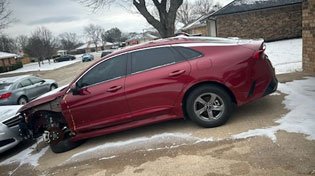
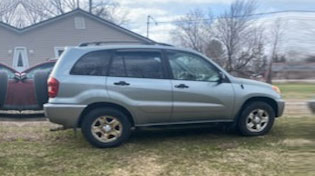
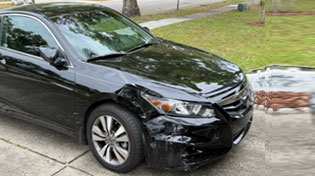
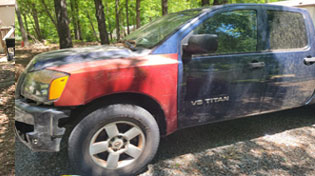
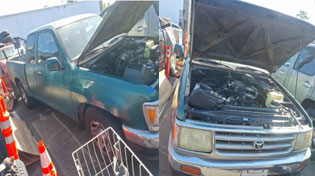
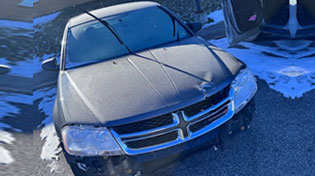
You can request an evaluation for an aging car with high mileage, an engine or transmission failure, collision damage, major wear, or a vehicle that no longer starts. Vehicles with missing components or salvage history may also be reviewed. Acceptance depends on the specific vehicle, ownership documents and available arrangements.
A non-running car is not necessarily a car that can be loaded easily. Tell ByeCar if the wheels are missing, the steering is locked, the keys are unavailable or the car has been partly dismantled. These details can affect whether an offer or pickup arrangement is possible. See the non-running-car page if the car cannot be driven.
Preparing a Junk Car for Pickup in Reading
Street Parking, Garages and Property Access
The place where a car sits matters as much as its ZIP code. In downtown Reading, a vehicle may be parked at the curb, in a parking structure or on property with restricted access. Street direction, curb restrictions and available loading space may also affect collection. The Berks County GIS map gallery includes official downtown and parking-garage maps, but these do not establish whether a particular vehicle pickup is permitted or possible.
Give the actual address and tell the buyer about garage clearance, narrow approaches, gates, street restrictions or a car parked behind other vehicles. If the car is held by a repair shop, storage facility or property manager, confirm who may authorize its release. Do not assume a vehicle can be loaded from every curb or garage entrance.
When the Vehicle Cannot Roll or Steer
Explain whether the car starts, rolls, steers and brakes, and whether its tires and wheels are present. A vehicle with locked wheels, damaged suspension or no keys may require different equipment from one that simply has a failed engine. Discuss these limits before any collection is arranged, including whether a pickup charge could apply.

Pennsylvania Title and Ownership Requirements
Standard Title Transfers
For an ordinary Pennsylvania title transfer, PennDOT's buying and selling guidance instructs the seller to sign and handprint their name on the ownership document. The seller's signature on a Pennsylvania title must be notarized or verified, and applicable odometer information must be entered. PennDOT recommends completing the transaction through a notary, tag service or motor vehicle dealer. Confirm the requirements for any out-of-state ownership document separately.
Lost Titles and Outstanding Liens
If a Pennsylvania paper title is lost and the lien has been satisfied, an eligible owner can request a duplicate using Form MV-38O. A lienholder uses a different procedure. PennDOT's duplicate-title instructions explain these distinctions. An outstanding loan or recorded lien must be addressed through the applicable process; asking for an offer does not clear it. Do not assume a bill of sale alone replaces the required title documents.
Salvage and Nonrepairable Documents
A vehicle with salvage paperwork is not automatically in the same category as one declared nonrepairable. PennDOT Form MV-6 covers applications for salvage and nonrepairable certificates. Under its instructions, a vehicle issued a nonrepairable certificate may be used only for parts or scrap and cannot subsequently receive an ordinary title or salvage certificate.
Pennsylvania also provides limited procedures under 75 Pa.C.S. Section 1162 and Section 1163 for qualifying salvage vehicles and transfers involving eligible recipients. These exceptions have specific conditions. They do not establish that every vehicle with a lost title can be transferred without ordinary documentation or that ByeCar can use every exception.
Describe the exact certificate and ownership records you have before agreeing to a transfer.
License Plates After the Sale
PennDOT instructs sellers to remove the registration plate after a standard title transfer and return it to the department unless transferring it to another vehicle. Keep the appropriate ownership and transaction records. Check the official PennDOT selling instructions for the steps that apply to your situation, and confirm who is completing each document.
Reading Rules for Inoperable and Stored Vehicles
Reading's published quality-of-life ordinance, Section 180-1203, addresses storage of unregistered, uninspected, inoperative and nuisance vehicles on premises. Chapter 564 also contains conditions for storing defined motor vehicle nuisances. Which provisions apply depends on the property and vehicle, so do not assume every private garage or fenced lot is automatically exempt.
On public streets, Section 576-408 restricts parking vehicles that are mechanically inoperable or lack current registration or inspection, subject to the ordinance's specific terms. Section 576-407 generally defines continuous parking in one street location for more than 72 hours as vehicle storage. If you have a city notice or an access problem, check the current requirements with Reading. Submitting an offer request does not resolve a violation.
Should You Repair the Car or Request an Offer?
Compare a written repair estimate with the car's condition, likely continued usefulness and the cost of keeping it. A failed inspection, major mechanical defect or prolonged period off the road may make an evaluation worth considering, but it does not automatically make repair the wrong choice.
If the car could safely return to use, consider the likely repair expense and your alternatives. If repair is impractical, an offer request can help you compare a possible sale with other disposal options. Neither the cost of repairs nor the amount another seller received guarantees an offer for your car.
What to Confirm Before Releasing Your Vehicle
Before accepting, confirm the proposed offer and whether it could change following verification or inspection. Ask whether pickup is available at your address, if any towing or storage charges apply, which documents and signatures are needed, and how and when payment would be provided. Remove your belongings and keep copies of completed transfer records.
Three practical reminders:
- Condition: Disclose missing components, whether the car rolls and steers, and any damage that could affect loading.
- Access: Confirm garage or street restrictions and obtain permission from any repair shop, lot or property manager.
- Terms: Understand the offer, possible adjustments, pickup costs, document responsibilities and payment arrangements before handoff.
Reading and Nearby Pennsylvania Service Areas
Reading is a city in Berks County. Nearby places such as West Reading and Wyomissing are separate municipalities, not interchangeable Reading neighborhoods. Provide the actual vehicle ZIP code and address so the inquiry reflects where the car is located. ByeCar's Pennsylvania service-area page provides statewide information and navigation to other city pages. A location listing does not guarantee collection at every address.
Request an Offer for Your Junk Car in Reading
Share the vehicle's year, make, model and location using the existing form. When contacted, explain its condition, title status and any pickup obstacles. If an offer is available, review the proposed amount, documents, pickup terms and payment arrangements before deciding whether the sale is right for you.
Frequently Asked Questions About Selling a Junk Car in Reading
Can I request an offer if my Reading car no longer starts?
Yes. Submit the vehicle details and explain whether it rolls, steers, has keys and has any missing parts. A non-running car can be evaluated, but an offer or pickup is not guaranteed.
What if I lost my Pennsylvania vehicle title?
If the lien has been satisfied, eligible owners can apply for a duplicate title with PennDOT Form MV-38O. If a lien remains, different steps may be needed. Check PennDOT's duplicate-title guidance before arranging a transfer.
Can a car with a lien or salvage document be considered?
You can describe the situation when requesting an evaluation. A lien may need to be satisfied or otherwise legally addressed. Salvage and nonrepairable documents have different rules, and neither status guarantees that a particular transaction qualifies.
Can pickup be arranged from a Reading street or parking garage?
That depends on the vehicle, location and safe loading access. Report one-way streets, garage height limits, parking restrictions and whether the vehicle can roll. Confirm arrangements and any fees before agreeing to sell.
Are inoperable vehicles allowed to remain parked in Reading?
Reading has rules for inoperable vehicles on public property and for certain vehicles stored on private premises. The applicable restrictions depend on the circumstances. Review Reading's public-street rules and property-related rule, or contact the city about a specific notice.
Is pickup free, and when would I receive payment?
Do not assume pickup is free or payment is immediate. Ask whether pickup is available, whether charges apply, and which payment method and timing would be agreed upon before you release the car.
What happens to my Pennsylvania license plate after the sale?
For a standard title transfer, PennDOT directs the seller to remove the plate after transfer and return it unless transferring it to another vehicle. Follow the PennDOT selling guidance and keep your transaction records.

