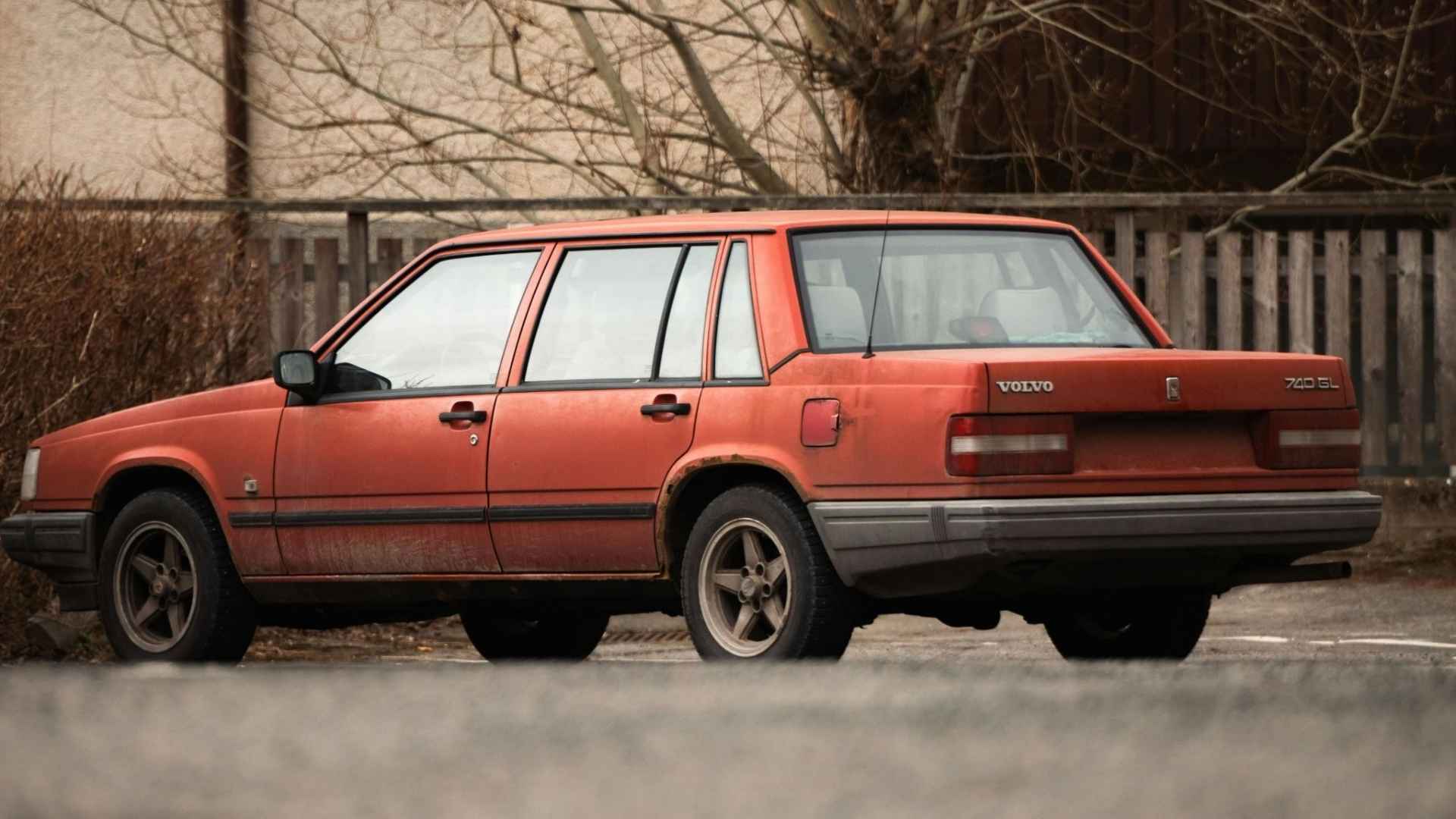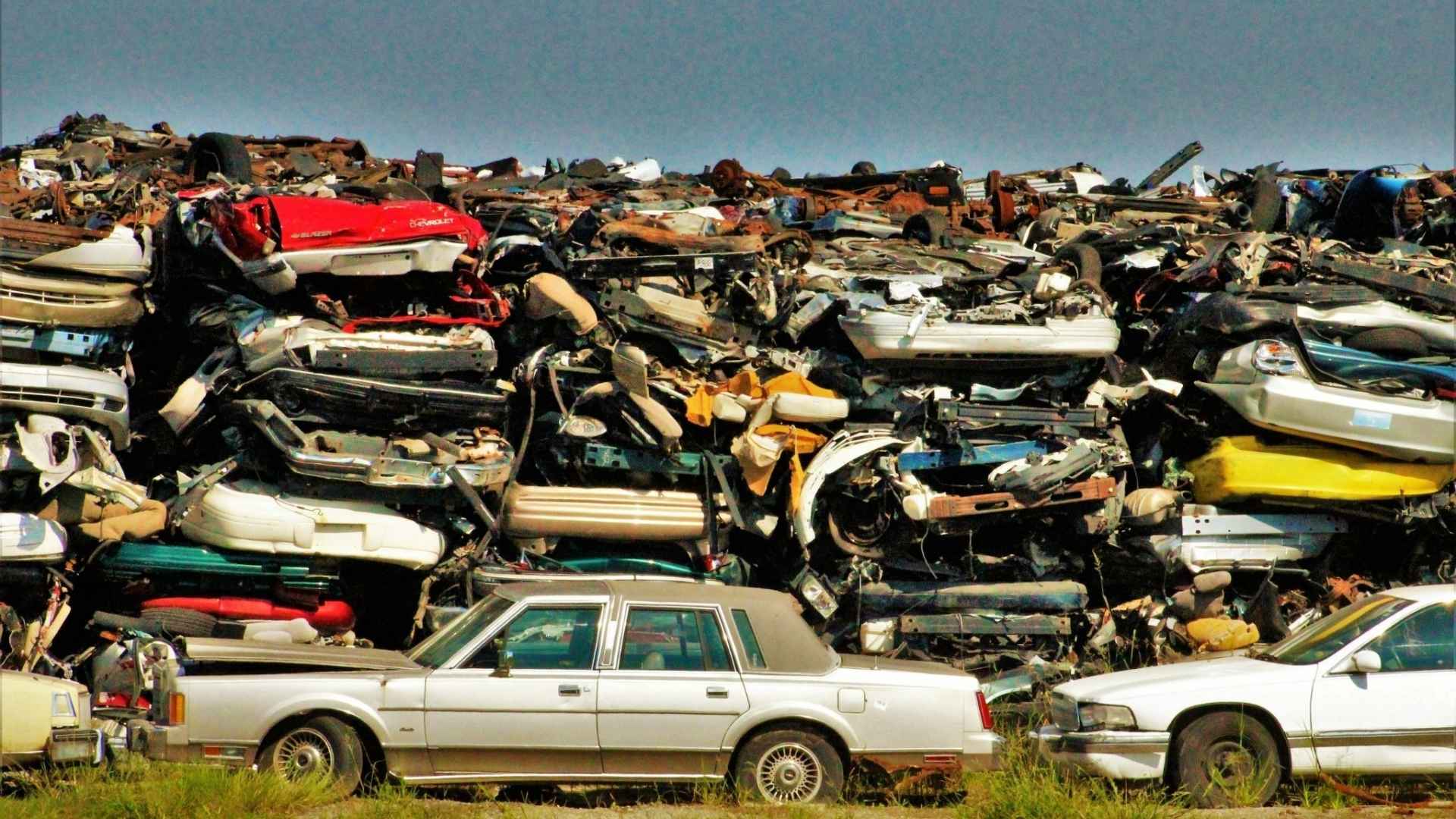

Junking a car in Indiana usually involves confirming ownership, finding a suitable buyer or recycler, arranging the vehicle's transfer, and completing the applicable paperwork. The process changes if your title is missing, the vehicle has a lien, or you want it permanently dismantled for scrap.
Indiana has a specific option for certain vehicles being disposed of for scrap without obtaining a replacement title first. However, that process requires approval from the Indiana Bureau of Motor Vehicles (BMV), and it does not apply automatically to every car.
Whether your vehicle no longer runs, has serious damage, or is too expensive to repair, the following steps explain your selling and disposal options, the documents you may need, and the responsibilities that remain after the car leaves your property.
What Does Junking a Car Mean in Indiana?
Junking a car generally means selling, transferring, or disposing of a vehicle that is no longer useful as transportation, often so its parts or materials can be recovered.
A vehicle might be suitable for junking because it has a failed engine, extensive collision damage, serious corrosion, missing components, or repair costs that are difficult to justify.
However, an old or non-running car is not automatically a legally classified salvage vehicle. Mechanical condition, registration status, and title classification are separate matters.
Indiana has specific rules for salvage and rebuilt vehicles. According to the Indiana BMV's special titling guidance, salvage-title requirements apply to certain wrecked or damaged vehicles manufactured within the last seven model years. Older damaged vehicles may also receive salvage titles under applicable circumstances.
A car that simply will not start does not necessarily fall into that category.
Before choosing how to dispose of your vehicle, establish whether you intend to sell it for continued use or repair, transfer it to a recycler for dismantling, or donate it. The destination can affect the documentation required.
Your Options for Selling, Donating, or Recycling a Car
Indiana vehicle owners have several potential ways to dispose of an unwanted car. The appropriate choice depends on its condition, ownership records, likely value, and whether you are willing to arrange transportation.
| Option | When it may make sense | What to check |
|---|---|---|
| Licensed automotive salvage recycler | The car is primarily suitable for dismantling, parts recovery, or scrap | Recycler licensing, required ownership documents, collection costs, and payment terms |
| Specialized junk-car buyer | You want the complete vehicle evaluated in its current condition | Vehicle eligibility, title status, location, final offer conditions, and pickup arrangements |
| Private as-is buyer | The car may appeal to someone seeking a repair or restoration project | Accurate condition disclosure, title transfer, buyer identity, and payment |
| Vehicle donation | You prefer supporting an eligible charitable organization over receiving sale proceeds | Charity eligibility, ownership transfer, transportation, receipt, and applicable IRS requirements |
A private buyer may be interested in a repairable vehicle, while a licensed recycler may be more appropriate for a car that has reached the end of its useful life.
Do not assume every junkyard accepts every vehicle, and do not rely on advertised pickup or payment promises without confirming the transaction terms.
For a vehicle being sold rather than donated, compare what you would actually receive after any transportation, storage, or processing charges.
What Title Do You Need to Junk a Car in Indiana?
Indiana generally requires an appropriate ownership document when a titled vehicle is sold or disposed of.
For an ordinary vehicle sale, the seller and purchaser must complete the applicable sections of the certificate of title. The Indiana BMV's Buying and Selling a Vehicle guidance explains this process. The purchaser is responsible for obtaining a new title through the standard transfer procedure.
Disposing of a titled vehicle for scrap is a distinct situation. Under Indiana Code §9-22-5-1.1, an owner who has the vehicle's certificate of title may sign and surrender that title to the automotive salvage recycler without applying for a separate Certificate of Authority. Confirm the recycler's title and documentation requirements before transferring the vehicle.
If the title is electronic, missing, damaged, or subject to a lien, review the appropriate BMV procedure before agreeing to the transfer. A bill of sale is not automatically a replacement for a required title.
Which ownership situation applies to your car?
| Your situation | Appropriate next step |
|---|---|
| You have a valid paper title | For an ordinary sale, complete the applicable title assignment. If you own the vehicle and are transferring it directly for scrap to an automotive salvage recycler, sign and surrender the title to that recycler. A separate Certificate of Authority is not required for that titled-vehicle scrap route. |
| You have an Indiana electronic title | Check whether an authorized dealer and participating service provider can transfer it electronically or whether you need a paper title |
| Your paper title was lost or destroyed | Consider the BMV duplicate-title process, or investigate the Certificate of Authority process if the vehicle is being disposed of for scrap |
| The vehicle has a recorded lien | Obtain the required lien release before completing the transaction |
| You need scrap disposal but lack an acceptable title | Determine whether you qualify to apply for BMV Certificate of Authority Form 55018 |
| The car is abandoned and does not belong to you | Follow Indiana's applicable abandoned-vehicle procedures; possession alone does not establish ownership |
A bill of sale may document the transaction, but Indiana generally does not allow it to replace a certificate of title when the vehicle is legally required to have one. The BMV's Bill of Sale guidance explains the limited exceptions.
What if you have an electronic Indiana title?
Since July 1, 2025, Indiana has offered electronic and paper vehicle titles.
Not having a physical title does not necessarily mean that the certificate has been lost.
Under the BMV's electronic-title program, an electronic title may be transferred using State Form 57738 when the purchasing Indiana dealer is affiliated with an approved Partial Service Provider (PSP).
That electronic transfer method is not automatically available for every private buyer or recycler.
If the receiving party cannot use the electronic process, ask the BMV about obtaining a paper title. Owners may request conversion of an electronic title to paper when no lien is listed, subject to the BMV's rules.
What if your paper title is lost?
Indiana offers a duplicate-title process for paper titles that are lost, stolen, damaged, destroyed, or illegible.
The Indiana BMV Duplicate Title Application page describes options that include applying online, at a branch, at a BMV Connect kiosk, through an approved service provider, or by mail.
Duplicate-title applications have identification, fee, and other requirements. A duplicate does not automatically remove an existing lien.
The BMV also specifies that duplicate-title transactions cannot be processed on electronic titles. Check your title format before beginning a duplicate application.
If you intend to dispose of a vehicle exclusively for scrap, Indiana's separate Certificate of Authority process may be relevant instead.
Can You Junk a Car Without a Title in Indiana?
In certain situations, yes, but you cannot assume that an ordinary bill of sale or proof of possession is enough.
The Indiana BMV provides a Certificate of Authority process for qualifying vehicles whose certificates of title are faulty, lost, or destroyed, as well as certain abandoned-vehicle situations.
The relevant document is Certificate of Authority – Disposal of a Motor Vehicle, State Form 55018.
An approved certificate authorizes a qualifying scrap-disposal transaction without first obtaining another certificate of title. It must be presented to the automotive salvage recycler or other appropriate facility.
This is a limited disposal process, not a general replacement for a title when selling a car for ordinary road use.
How the Indiana Certificate of Authority process works
The Indiana BMV's Certificate of Authority application packet explains the required forms, ownership evidence, applicable lien releases, special abandoned-vehicle documentation, and filing instructions.
- Complete State Form 55018. Provide the requested owner, vehicle, and transaction information.
- Provide supporting evidence. The packet identifies proof of ownership, such as a current registration or insurance settlement, among the relevant documentation.
- Address any recorded lien. Proof of lien release is required when a lien exists.
- Meet any special requirements. For an abandoned vehicle, the BMV packet requires evidence of the applicable notices to the owner and lienholder, including the required certified mailing or qualifying certificate of mailing and a copy of the notice. If the vehicle has no VIN, the packet requires a physical inspection completed by a police officer. Possessing an abandoned vehicle does not automatically establish authority to transfer it.
- Submit the application for review. The BMV's published packet lists a $4 application fee and provides mailing instructions. Its special-titling page also describes an electronic submission option.
- Wait for approval. If the BMV determines that the application meets the requirements, it issues the approved certificate for presentation to the receiving facility.
Check the current packet for any revised requirements or fees before applying.
The BMV also permits an automotive salvage recycler to apply on behalf of a qualifying individual under specified conditions.
Do not transfer a vehicle merely because you submitted Form 55018. Confirm that the necessary approval has actually been issued and that the receiving facility accepts the authorized disposal arrangement.
What if the Car Has a Lien or Salvage Title?
Outstanding liens
A lien is a legal interest in a vehicle, commonly associated with a loan. Having possession of the car does not mean that an outstanding lien can be disregarded.
Indiana's BMV lien guidance states that lienholders must release their interest before a vehicle is sold.
For a paper title, the lienholder may need to complete the appropriate release section or provide acceptable release documentation. Electronic liens must be released electronically.
If money is still owed, contact the lender to establish the required steps. Do not assume that a junk-car buyer will pay the remaining loan or complete the release for you.
The Certificate of Authority process also requires lien-release evidence where applicable.
Salvage and rebuilt titles
A salvage title reflects a particular title status. It is not simply another term for an old, broken, or undriveable car.
Indiana has separate procedures for salvage vehicles and for obtaining a rebuilt title after qualifying restoration.
If the vehicle already carries a salvage or rebuilt brand, disclose that status to the buyer or recycler. If it has been badly damaged but has not been assigned a salvage brand, do not represent its title status inaccurately.
The BMV's salvage-title information explains these classifications and the applicable application processes.
How to Junk a Car in Indiana Step by Step
The following sequence combines the practical sale or disposal arrangements with the applicable Indiana ownership requirements.
Step 1: Confirm the vehicle's ownership status
Identify the titled owner or owners, check for recorded liens, and establish whether the title is paper, electronic, missing, or branded.
If documentation is incomplete, determine the appropriate BMV process before arranging the transfer.
Step 2: Decide where the vehicle should go
Choose between a salvage recycler, a buyer willing to evaluate it as-is, a private purchaser, or an eligible vehicle-donation program.
For permanent scrap disposal, ask the receiving facility which documents it requires.
Step 3: Describe the car accurately
Provide the year, make, model, VIN when requested, approximate mileage, mechanical condition, major damage, significant missing parts, and current location.
Explain whether the vehicle runs, rolls, steers, and can be accessed safely.
Step 4: Confirm the agreement
Before accepting an offer or arranging disposal, establish the net amount payable, any collection or storage charges, payment method, timing, required documents, and whether the arrangement depends on further inspection.
A price discussed before inspection may not be final unless the agreed terms make that clear.
Step 5: Prepare for delivery or collection
Remove personal belongings and the license plate, gather the required paperwork, and confirm any access restrictions with the receiving party.
Do not attempt to drive an unsafe vehicle to a recycling facility.
Step 6: Complete the authorized transfer
Follow the appropriate title-assignment or BMV-approved disposal process. Record the recipient's identity, vehicle details, date, and the agreed transaction terms.
Retain copies of completed transfer and payment records.
After the car is transferred, review the remaining plate, registration, insurance, and tax-related matters described below.
What Happens to Your Plates, Registration, and Insurance?
Junking the vehicle does not necessarily end every administrative responsibility immediately.
License plates
The Indiana BMV instructs sellers to remove their license plates when transferring a vehicle.
You do not have to return the plates of a sold vehicle to the BMV. Depending on eligibility and the applicable procedures, you may be able to transfer a plate to another vehicle you own.
Follow the BMV's Buying and Selling guidance before using or disposing of the plate.
Registration and insurance
After a sale or disposal, review the vehicle's registration status and any obligations that apply before canceling or changing insurance coverage.
Check with the appropriate agency and insurer if the timing or required steps are unclear. Do not assume that physical pickup automatically completes an ownership transfer.
Possible vehicle excise-tax credit or refund
Indiana provides a potential excise-tax credit or refund for certain vehicles that have been sold or destroyed.
The BMV's vehicle registration fees and taxes page identifies Application for Vehicle Excise Tax Credit / Refund, State Form 55296, and explains applicable eligibility and proof requirements.
An approved claim depends on the vehicle, the taxes paid, the qualifying event, and supporting documentation. There is no automatic refund merely because a car was junked.
Keep appropriate transaction records in case they are needed for a claim.
How to Choose a Licensed, Responsible Recycler
If your vehicle is being dismantled for scrap, choose a facility authorized to carry out the relevant work.
The Indiana Secretary of State oversees automotive salvage recycler licensing. Its Automotive Salvage Recycler page explains the types of activity requiring a license.
You can check a company's licensing status using the state's Valid Dealers search instructions, which direct users to the official dealer-search system. Search for the applicable license type and confirm the business information and current status.
Indiana also has the Department of Environmental Management's voluntary Indiana Clean Yard recognition program.
The IDEM Clean Yards program recognizes participating salvage recyclers that meet its environmental criteria. This recognition is useful additional information, but it is not a substitute for checking any required operating license.
Before transferring a vehicle to a recycler, ask whether it accepts your particular condition and title documents, who arranges transportation, what charges apply, and what paperwork you will receive.
Vehicle recycling can involve used fluids, batteries, tires, refrigerants, and other materials requiring appropriate handling. These operations are subject to environmental requirements, as explained in IDEM's auto salvage recycling guidance.
How Much Might Your Junk Car Be Worth?
The value of an unwanted car depends on more than its age or whether the engine starts.
A buyer or recycler may consider its year, make, model, condition, completeness, recoverable components, recyclable materials, transportation costs, and current demand.
A complete car with potentially reusable components may be evaluated differently from one that has been dismantled or severely damaged.
When comparing offers, consider what will actually remain after any agreed transportation or processing charges.
There is no guaranteed minimum amount for every junk car in Indiana, and a price from one buyer does not establish what another buyer will offer.
For more information about the valuation factors, see how car scrap value is estimated.
Avoid removing valuable components solely because you expect to earn more by selling them separately. Dismantling can introduce safety and disposal responsibilities and may reduce a whole-vehicle offer.
Preparing Your Car for Pickup or Delivery
Before arranging collection, confirm both the paperwork and the physical condition of the car.
Have these details ready:
- Year, make, model, VIN, and approximate mileage.
- Current location and any access restrictions.
- Whether the vehicle starts, rolls, steers, and has usable wheels.
- Availability of keys and significant missing components.
- Known collision, fire, flood, or mechanical damage.
- Title format, ownership status, and known liens.
- Any storage, impound, or repair-shop charges and release requirements.
Remove personal belongings from the cabin and trunk, including documents containing personal information.
If the vehicle is in a locked garage, fenced lot, storage facility, or other restricted location, discuss access and permission before collection is scheduled.
Let the receiving party know about leaking fluids, severely damaged components, or other hazards. Do not attempt unsafe repairs or dismantling merely to prepare the vehicle for pickup.
Collection availability and costs are not universal. Confirm whether the buyer or recycler can collect your particular vehicle at its location and whether any additional equipment or fees will be involved.
Considering a Vehicle Donation?
Donating an unwanted car may be an alternative when supporting a charitable organization matters more to you than receiving a purchase payment.
Before transferring the car, use the IRS Tax Exempt Organization Search to check whether the intended recipient is eligible to receive tax-deductible contributions. Ask who will take ownership, who arranges transportation, and what written acknowledgment and vehicle-transfer documents will be provided.
A vehicle donation does not automatically produce a tax deduction.
Federal tax treatment depends on the donor's circumstances, the organization's eligibility, the claimed amount, and what the charity does with the vehicle.
Under the IRS vehicle donation guidance, additional acknowledgment and reporting requirements apply when a vehicle deduction exceeds $500. In many sales by the charity, the deductible amount is limited by the gross sale proceeds, subject to applicable exceptions.
Obtain the appropriate written acknowledgment and keep ownership-transfer records. Consult the IRS guidance or a qualified tax professional before claiming a deduction.
Request an Evaluation From ByeCar
If you prefer to explore selling rather than arranging disposal directly with a recycler, ByeCar accepts inquiries about junk and damaged vehicles.
You can request a junk-car evaluation in Indiana using your vehicle details and ZIP code, or contact ByeCar if you have questions about the vehicle's condition or documentation.
Submission does not guarantee an offer, purchase, or collection. Confirm the vehicle's eligibility, required ownership documents, proposed amount, pickup arrangements, and payment terms before proceeding.
Frequently Asked Questions About Junking a Car in Indiana
Can I junk a car in Indiana without its title?
Indiana has a Certificate of Authority process for certain vehicles being disposed of for scrap when the title is faulty, lost, or destroyed, and for qualifying abandoned-vehicle situations. BMV approval and supporting documentation are required. A bill of sale alone is generally not enough when Indiana law requires a title.
What is Indiana BMV Form 55018?
State Form 55018 is the Certificate of Authority – Disposal of a Motor Vehicle. It provides a way to apply for authorization to dispose of a qualifying vehicle for scrap without first obtaining another title. The approved certificate must be provided to the automotive salvage recycler or other appropriate facility.
Can I junk a car with an electronic Indiana title?
Possibly. Indiana allows certain electronic-title transfers through authorized dealers working with Partial Service Providers. That process is not available to every buyer. Ask the receiving facility whether it can accept an electronic transfer or whether you need to request a paper title from the BMV.
What if there is still a lien on the vehicle?
Indiana requires lienholders to release their interest before a vehicle is sold. Contact the lender or lienholder for the appropriate release. An electronic lien must be released electronically. Do not assume a recycler or junk-car buyer will pay off the remaining balance or remove the lien for you.
Do I have to return my license plates when junking a car?
No. Indiana BMV says license plates from sold vehicles do not have to be returned to the agency. Remove the plate when transferring the car, then follow the BMV's applicable rules if you want to transfer it to another vehicle you own.
Can I sell a non-running car for parts or scrap?
Yes, a vehicle does not need to run to have potential value for recoverable parts or recyclable materials. However, the buyer must accept its condition, the ownership transfer must comply with applicable Indiana requirements, and collection arrangements must be confirmed. A licensed recycler is an appropriate option to consider when the car is intended for dismantling.