

 Over 25,000 cars purchased nationwide

If you have an unwanted car in New Bedford, you can request an evaluation even if it no longer runs or needs significant repairs. Start with the vehicle's year, make, model, ZIP code, and your contact information. Be prepared to describe its condition, ownership documents, and location if follow-up is needed. An inquiry does not guarantee an offer or commit you to a sale.
What Affects a Junk Car Offer in New Bedford?
An offer may depend on the vehicle's year, make, model, mileage, mechanical condition, accident damage, and remaining components. A buyer may also need to consider title or lien issues and whether the car can be collected safely.
A car with an engine failure but working wheels may be easier to move than one with missing tires, a seized brake, or damaged suspension. Tell the buyer about major missing parts, whether the vehicle starts or rolls, and anything that could complicate loading. If requested, photos and the vehicle identification number (VIN) can help describe its condition accurately.
Do not treat advertised prices or another seller's transaction as an estimate for your car. Review the individual offer and any conditions before deciding whether to proceed.

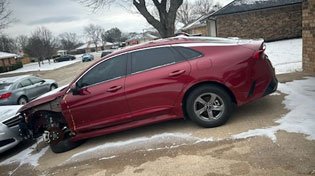
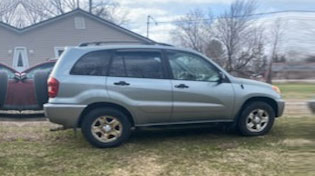
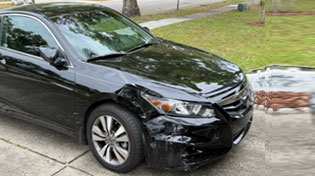
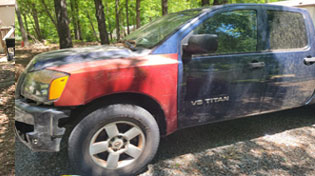
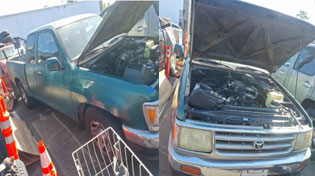


Junk, Damaged, and Non-Running Cars
You can submit a vehicle with engine or transmission problems, collision damage, flood or fire exposure, extensive rust, missing components, or a history of being declared a total loss. An older car that runs may also be considered if its owner no longer wants it.
Describe known defects and whether the car starts, steers, brakes, and rolls. Report missing keys, wheels, or other major parts, and disclose a salvage designation if one appears on the title. Submitting a vehicle for review does not guarantee purchase, collection, or any particular price.
Preparing an Unwanted Car for Collection in New Bedford
Explain where the vehicle is parked
Say whether the car is in a driveway, apartment lot, repair shop, gated property, or public street. On property you do not control, check whether the owner or manager must authorize access. Loading must account for parking restrictions and available space.
In downtown New Bedford, metered spaces and parking zones have different time limits. Check posted signs before arranging collection from a public street rather than assuming the car can remain there indefinitely. See the New Bedford parking guide.
Report anything that affects safe loading
Explain whether the car can roll, steer, and brake. Mention flat tires, missing keys, a stuck parking brake, leaking fluids, low garage clearance, narrow access, or a vehicle blocked by others. These details can affect whether collection is possible and what arrangements are needed.
Do not drive an unsafe or unregistered vehicle to a different location just to make it easier to collect. Confirm collection availability and access requirements before making separate towing or storage arrangements.
New Bedford Parking and Abandoned-Vehicle Considerations
Check seasonal restrictions before street collection
New Bedford has issued seasonal snow-emergency parking bans, including additional restrictions in the downtown and Acushnet Avenue business districts. These restrictions apply during announced bans, not throughout the year. A vehicle parked in violation during an active ban may be ticketed or towed.
Before arranging street collection during winter weather, review the City of New Bedford's winter-storm guidance and current city announcements. Confirm any applicable restrictions and do not assume a disabled vehicle can remain parked until collection is scheduled.
Snow-emergency rules are not a year-round prohibition. Ordinary signs, meter rules, property access permissions, and other parking restrictions still matter outside an emergency.
Does the 72-hour abandoned-vehicle law allow a disabled car to remain parked?
No. Massachusetts General Laws Chapter 90, Section 22C gives specified officials authority to act in certain circumstances involving vehicles that appear abandoned for more than 72 hours, including vehicles on public or private ways and vehicles on property without the owner's or lessee's permission. The law requires the applicable official determination and other statutory conditions.
It does not give a vehicle owner an automatic 72-hour right to park illegally, obstruct access, or leave a disabled car on someone else's property. Ordinary parking restrictions and active local emergency rules may apply independently.

Massachusetts Titles and Junk-Car Ownership Documents
What if your title is missing or the vehicle is title-exempt?
Massachusetts RMV generally requires a vehicle title. Its age-related exemption for passenger vehicles applies to model year 1980 or older vehicles purchased before November 26, 1990. A vehicle does not qualify for the exemption simply because it is old, damaged, or no longer running.
If a required title is lost or damaged, follow the RMV replacement procedure. Resolve any outstanding lien or other ownership problem before completing the applicable transfer. A bill of sale does not automatically replace a required title.
For a vehicle legally exempt from titling because of age, the RMV accepts a copy of its last registration as ownership evidence in the permanent junking process. This documentation forms part of the requirements for the party receiving the vehicle for junking. It does not guarantee that ByeCar can purchase a particular vehicle without a certificate of title.
Selling a damaged vehicle is not always the same as permanently junking it
A damaged or non-running car is not automatically classified as junk. Massachusetts distinguishes salvage titles from permanent junking.
An RMV record marked JUNK cannot be titled or registered again in Massachusetts. Confirm whether the transaction involves ordinary transfer or permanent scrapping.
Who submits the documents when a car is permanently junked?
Under Massachusetts General Laws Chapter 90D, Section 20E, a person or business that takes possession of a vehicle for permanent junking or scrapping must have the accepted ownership documents surrendered to the RMV for cancellation within 10 days after receiving the vehicle.
The RMV's junk-vehicle guidance also requires a completed junking or scrapping form or the qualifying salvager or recycler stamp on the ownership document.
This filing obligation applies to the party receiving the vehicle for junking. It should not be confused with every seller's obligations in an ordinary vehicle sale. Confirm the actual buyer or recycler's role and retain records of the vehicle's transfer.
What to Do After Selling Your Car in New Bedford
Cancel or transfer the registration and handle the plates
If you are not transferring the registration, follow the RMV cancellation procedure. Keep the cancellation receipt and give your insurer a copy. The car cannot be driven on public roads after cancellation.
The RMV says canceled plates do not need to be returned. After cancellation, recycle or destroy them according to its instructions. Coordinate insurance changes with your insurer and keep the sale and cancellation records.
Check whether a motor-vehicle excise abatement applies
Selling a vehicle does not automatically eliminate its motor-vehicle excise bill. Under Massachusetts Department of Revenue guidance, transferring vehicle ownership and canceling or transferring its registration during the applicable calendar year may qualify for an abatement. Canceling registration while retaining ownership generally does not.
If New Bedford issued your excise bill, contact the city's assessing authority about applying and providing evidence of the ownership transfer and registration action. Applications generally must be received within three years after the excise was due or one year after the excise was paid, whichever is later.
An application does not suspend collection of an outstanding bill. Approval and any reduction depend on the applicable requirements and circumstances.
How the Offer and Sale Process Works
- Request an evaluation. Enter the vehicle's year, make, model, ZIP code, and contact details using the existing form.
- Describe its condition and documents. If contacted for more information, disclose damage, missing components, mobility, title status, and any lien or access concerns.
- Review any available offer. Confirm the amount, inspection or document conditions, collection availability, charges, and payment arrangements.
- Complete an agreed sale. Follow the applicable ownership-transfer requirements and collection plan. Address your remaining RMV registration, insurance, and excise responsibilities afterward.
Submitting a request does not guarantee an offer or automatically schedule collection.
Confirming Collection and Payment Terms
Before accepting, confirm collection at the actual address, possible loading needs or fees, what could change the amount, and required documents.
ByeCar's published notice says "cash for junk cars" does not necessarily mean physical cash and payment is typically by check or wire. Confirm the actual method and timing before releasing the car. Do not assume free towing or a guaranteed schedule.
Condition: Describe major damage, missing parts, and whether the vehicle can roll and steer.
Access: Confirm parking restrictions, gates, space for loading, and required property permission.
Documents: Check ownership, lien release, transfer records, registration, and any junking documentation that applies.
New Bedford and Other Massachusetts Locations
This page concerns vehicles located in New Bedford. Provide the vehicle's actual ZIP code and address when discussing collection; service availability and local parking requirements depend on its real location, not just the owner's mailing address.
For vehicles elsewhere in the state, use the Massachusetts junk-car service page for statewide context and location navigation. Collection at any address must be confirmed.
Request an Offer for Your New Bedford Vehicle
Enter your vehicle's basic details and contact information using the existing offer form. Be ready to answer follow-up questions about condition, ownership, and access. If an offer is available, review the amount, documents, collection arrangements, and payment terms before deciding whether to proceed.
Frequently Asked Questions About Selling a Junk Car in New Bedford
Can I request an offer for a car that does not run?
Yes. Describe its mechanical condition and mobility if asked. Purchase and collection are not guaranteed.
What if I lost my Massachusetts title?
For a titled car, request an RMV replacement and resolve any lien. A sale without required documents is not guaranteed.
Can an older title-exempt vehicle be junked using its registration?
Only if the vehicle qualifies for a title exemption. Massachusetts' age-related passenger-vehicle exemption applies to model year 1980 or older vehicles purchased before November 26, 1990. For qualifying title-exempt vehicles, the RMV accepts a copy of the last registration as ownership evidence in the permanent junking process. This does not guarantee that a particular buyer will accept the vehicle without a title.
Is selling a car the same as permanently junking it?
No. Permanent junking triggers a recipient filing duty within 10 days. A vehicle recorded JUNK cannot later be titled or registered in Massachusetts.
Can a vehicle be collected from a downtown street or apartment parking lot?
It depends on legal parking, loading access, property permission, and confirmed terms. Check signs and obtain necessary approval.
Are towing and payment free or immediate?
Not automatically. Confirm any charges, pickup schedule, and payment terms before accepting an offer.
What happens to my Massachusetts registration and plates after selling?
Cancel registration unless transferring it to another eligible vehicle. Keep the receipt, notify your insurer, and destroy or recycle canceled plates under RMV guidance.
Can I get an excise abatement after selling my car?
Possibly, if ownership and registration are properly transferred or canceled in the applicable year. Apply to the bill's assessing authority with supporting records; filing does not suspend payment.

