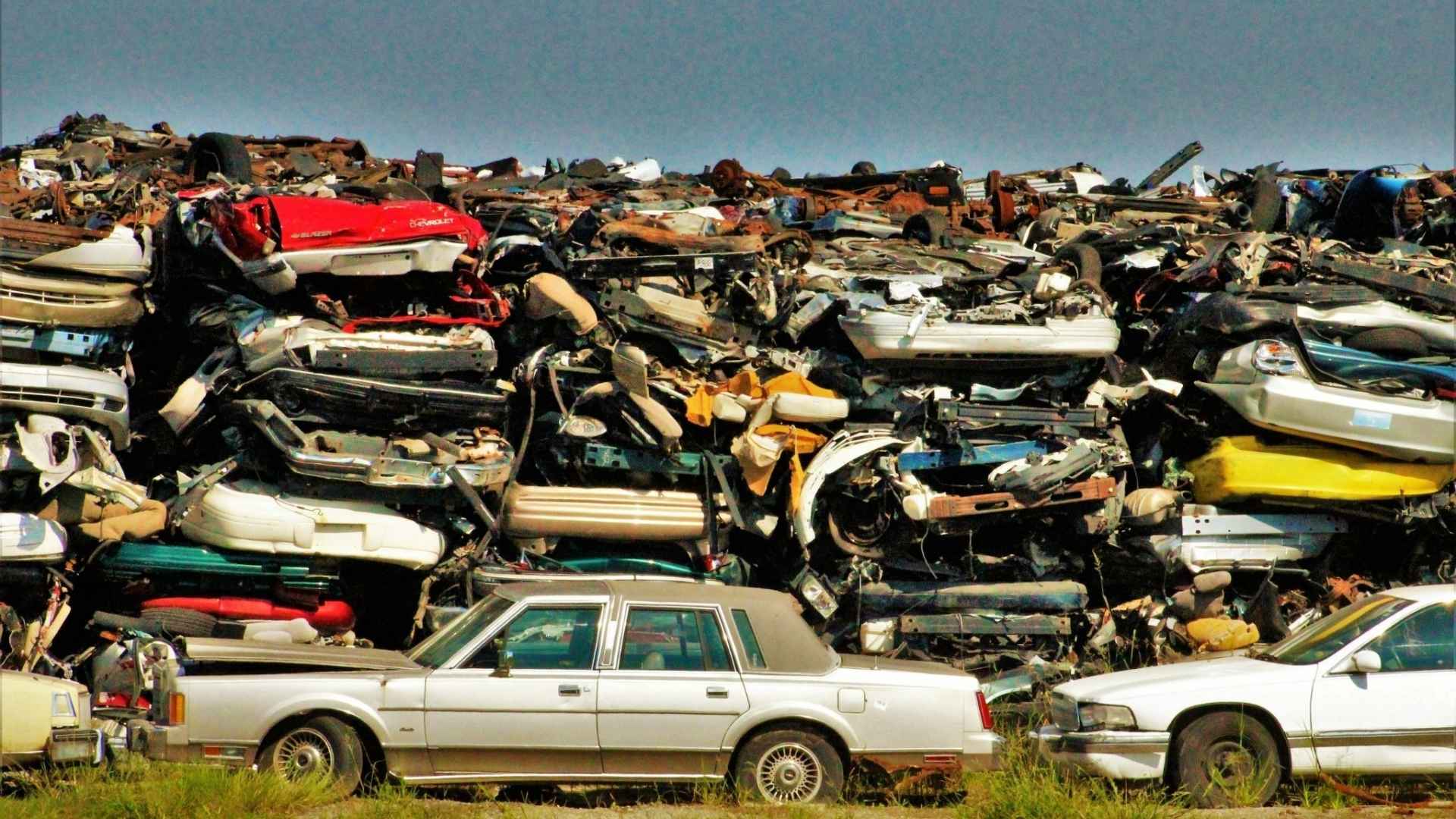

Junking a car in Tennessee starts with confirming that you have the right to transfer it and identifying which documents apply. A vehicle that no longer runs or costs too much to repair does not automatically need a salvage or non-repairable certificate.
For most owners, the practical steps are to check the title and any liens, choose a buyer or recycling facility, complete the appropriate ownership documents, and keep a record of the transfer. Tennessee also has special rules for totaled vehicles and a limited no-title exception for certain older vehicles sold directly to qualifying dismantlers or scrap processors.
This guide explains those differences so you can choose a lawful disposal method and prepare the vehicle before it leaves your property.
How to Junk a Car in Tennessee: Step by Step
The correct paperwork depends on the vehicle's ownership and title status, but most junk-car transactions follow these steps.
- Confirm ownership. Locate the current title or other legally acceptable ownership documents. Check that the vehicle identification number (VIN) matches the vehicle and that the person signing has authority to transfer it.
- Check for liens and title restrictions. Look for an outstanding loan, salvage designation, non-repairable certificate, or other issue that could affect the transfer. Resolve questions before agreeing to release the vehicle.
- Choose how to dispose of the car. Compare a motor vehicle dismantler or recycler, a scrap processor, a private buyer, charitable donation, or a junk-car buying service. Ask what vehicle conditions and ownership documents each will accept.
- Confirm the transaction terms. Agree on the payment amount and method, whether transportation is available, any fees, and who will complete each document. A vehicle that cannot roll or steer may need special collection arrangements.
- Complete the appropriate paperwork. For an ordinary titled sale, properly assign the title and provide an odometer disclosure when required. Special salvage and no-title transactions follow different procedures.
- Finish the handoff. Remove your license plate and personal belongings, retain transaction records, and follow up on your registration and insurance responsibilities.
Tennessee's vehicle-titling guidance describes the documentation used in standard title transactions. Do not assume that selling a non-running vehicle automatically cancels its title or registration.
What Paperwork Do You Need to Junk a Car in Tennessee?
There is no single paperwork checklist that applies to every junk car. The documents depend on whether you are making an ordinary sale, transferring an already-branded vehicle, or using a specific statutory scrap procedure.
| Your situation | Documents or action to check |
|---|---|
| You have a valid Tennessee title | Properly assigned title, applicable odometer disclosure, and transaction records |
| Your Tennessee title is lost or damaged | Duplicate title through the appropriate county clerk |
| A lender still has a recorded lien | Lienholder authorization and proof of discharge or other applicable title arrangements |
| The vehicle has a salvage certificate | Existing salvage ownership document and lawful transfer requirements |
| The vehicle needs a salvage or non-repairable certificate | Tennessee Form RV-F1311801 and supporting ownership documentation |
| The vehicle is at least 12 years old and has no available title | Whether a qualifying dismantler or scrap processor can use the limited statutory exception |
| You do not have the documents needed to establish ownership | Ask the Tennessee Department of Revenue which title-establishment procedure, if any, applies. Depending on the vehicle's age, value, lien status, and ownership evidence, certification of ownership or a surety bond may be relevant. These procedures do not automatically authorize a title-free sale. |
Odometer disclosure: Tennessee uses the 20-year disclosure framework for model-year 2011 and newer vehicles. Vehicles from model year 2010 or earlier remain under the older ten-year exemption. For example, a 2011 model-year vehicle does not become exempt until January 1, 2031. Check the Department of Revenue's odometer guidance for the applicable rule.
A bill of sale can help document a transaction, but it is not an automatic substitute for a required certificate of title.
Can You Junk a Car Without a Title in Tennessee?
Sometimes, but not every missing-title situation is treated alike. Tennessee distinguishes a lost title, insufficient ownership evidence, and an older vehicle acquired for dismantling by a qualifying business.
If You Lost Your Tennessee Title
Start with the state's duplicate-title process.
The Department of Revenue currently lists a $14 state fee, with possible additional county fees. You can apply through the appropriate county clerk's office in person or by mail, using the state's Multi-purpose, Noting of Lien, and Duplicate Title Application.
The state also requires proof that recorded liens have been discharged. If a lien remains, the duplicate-title request must originate from the lienholder, and the replacement document is sent to the first lienholder on record.
If a duplicate title is not an available solution, Tennessee has separate procedures for establishing ownership when the Department of Revenue cannot approve an ordinary title application. These generally require that the vehicle not be reported stolen and that no known lien remains.
Under the state's current guidance, a vehicle worth $3,000 or less, or at least 30 years old, may be considered through the Certification of Ownership process. A vehicle less than 30 years old with a fair market value above $3,000 may require a surety bond. Supporting documentation and departmental review are required.
These are procedures for establishing ownership or obtaining a title, not automatic exceptions to title-transfer requirements. Review Tennessee's Certification of Ownership and Surety Bond Process guidance before proceeding.
The Limited 12-Year Scrap Exception
Tennessee Code § 55-3-203 provides a specific exception for certain vehicles that are 12 years old or older.
A qualifying motor vehicle dismantler and recycler or scrap metal processor may purchase such a vehicle without obtaining its title when it is acquired solely for parts, dismantling, or scrap and all statutory requirements are met.
Those requirements include a signed seller statement confirming lawful authority to sell the vehicle, the absence of any lien, and the understanding that the vehicle will be dismantled or destroyed and never titled again. The receiving business must also collect the required identifying information and transaction records, including the applicable identification copy and fingerprint.
The business cannot dismantle, crush, or shred the vehicle during the required three-business-day holding period, which includes the purchase date. It must also meet the state's reporting requirements.
This exception is not a general right to sell any car without a title. It does not apply to a vehicle with an outstanding lien, and an ordinary private buyer cannot rely on it simply because the vehicle is old. Confirm that the receiving business qualifies and will complete the required procedure before releasing the car.
The existence of this Tennessee exception also does not establish that ByeCar or any particular collection partner can accept your vehicle without a title.
Salvage, Non-Repairable, and Rebuilt Vehicles in Tennessee
A vehicle's poor condition does not automatically make it a legally designated salvage or non-repairable vehicle.
Tennessee Code § 55-3-201 defines the passenger motor vehicle category used in these provisions by age and vehicle type. It generally includes qualifying road vehicles ten model years old or less, including multipurpose vehicles and light-duty trucks rated at no more than 9,000 pounds gross vehicle weight. Motorcycles are also included under the statutory definition.
For vehicles covered by the salvage definition, the applicable damage threshold is a cost of repairs exceeding 75% of the vehicle's retail value. The law also permits an owner to elect salvage designation in certain circumstances without meeting that repair-cost threshold.
A non-repairable vehicle is defined separately. It includes a qualifying vehicle incapable of safe road operation with no resale value other than parts or scrap, or a vehicle the owner irreversibly designates for parts or scrap. Tennessee also specifically addresses certain saltwater-damaged vehicles.
The three classifications have different consequences.
| Document/status | General meaning | Road-use consequence |
|---|---|---|
| Salvage | Vehicle meets an applicable salvage definition or owner-election provision | Cannot be registered for road use until it completes the rebuilt process |
| Non-repairable | Vehicle qualifies for non-repairable designation or is irreversibly designated under the applicable rules | Cannot be titled or registered again for road use |
| Rebuilt | Previously salvage vehicle completes the required reconstruction, anti-theft inspection, and title procedure | May be registered when approved |
An insurer-declared total loss may require a separate certificate procedure. The Tennessee Department of Revenue explains that when an insurance company deems a vehicle a total loss, its original title and registration become void.
Owners of older vehicles should not apply the ten-model-year salvage definition or 75% damage threshold to every junk-car transaction without considering the applicable statutory scope. Ordinary title-transfer and qualified scrap-purchase rules may be more relevant.
See Tennessee Code § 55-3-201 and the Department of Revenue's salvage guidance.
How to Apply for a Tennessee Salvage or Non-Repairable Certificate
Not every vehicle sold for junk or scrap requires a new salvage or non-repairable certificate. The application applies when Tennessee's certificate rules require one, including qualifying total-loss circumstances, or when an eligible owner seeks a designation permitted by law.
Tennessee uses Application RV-F1311801 for the initial salvage or non-repairable certificate procedure. The applicant must provide the required ownership documentation, a power of attorney when someone else submits the application on the owner's behalf, and an odometer disclosure when applicable.
The application is submitted by mail to the Department of Revenue. It has no state application fee. The $75 fee, rebuilding photographs, parts receipts, and anti-theft inspection belong to the separate salvage-to-rebuilt process.
The Department of Revenue instructs applicants to mail the completed application and supporting documents to:
Tennessee Department of Revenue
Vehicle Services Division
500 Deaderick Street
Nashville, TN 37242
The state says these applications are accepted by mail, not in person.
Use the official Application for Salvage or Non-Repairable Certificate, Form RV-F1311801.
What Happens to Your Tennessee Title, Plates, and Registration?
Once you have chosen a lawful disposal method, complete the correct ownership transfer and keep copies of the documents you sign.
For an ordinary titled transaction, verify the title assignment, buyer details, VIN, and any required odometer disclosure. A title that lists another owner or an unresolved lien needs additional attention before transfer.
Remove and Handle Your License Plate
Tennessee license plates generally follow the owner rather than the vehicle. Remove the plate before releasing a car you have sold.
The state permits an eligible plate to be transferred to another vehicle through the county clerk for a $1 fee. Some specialty and personalized plates have separate surrender or exchange requirements, and plates meeting certain conditions must be destroyed.
Not every Tennessee seller is required to surrender an ordinary license plate. Follow the Department of Revenue's plate instructions for your situation.
Understand Your Responsibilities After Disposal
Keep the signed transfer documents, receipt or other transaction record, and any confirmation provided by the receiving business. Ask your county clerk whether registration-related steps remain, and contact your insurer about ending or updating coverage at the appropriate time.
Tennessee Code § 55-3-202 also addresses owners who personally dismantle or wreck a registered vehicle. It requires the owner to forward the certificate of title to the Department of Revenue, while allowing retention of registration documents and plates for an eligible transfer. That is a specific legal situation, not a blanket instruction that every seller must mail their title to the state after an ordinary sale.
Do not assume a buyer automatically completes every registration or ownership obligation on your behalf.
Ways to Dispose of a Junk Car in Tennessee
The right option depends on the vehicle's condition, ownership documents, location, and whether you want payment, a possible charitable deduction, or to recover usable parts.
1. Sell to a Motor Vehicle Dismantler or Recycler
A qualifying dismantler or recycler may accept vehicles for parts recovery or scrap processing. Ask what title documents are required, whether the business accepts the vehicle's condition, and whether you must deliver it.
Check that the business is appropriately authorized for the transaction. Tennessee's Motor Vehicle Commission publishes dismantler and recycler licensing information.
2. Sell Privately or Sell Individual Parts
A private buyer might be interested in repairing a vehicle or using specific components. This can involve more time, multiple transactions, and responsibility for accurate condition disclosures.
If you intend to dismantle the car yourself, first review the applicable title and environmental requirements. Do not treat individual parts sales as an automatic exemption from vehicle-ownership or disposal rules.
3. Donate the Vehicle
A qualified charitable organization may accept a non-running or damaged vehicle. Ask whether it accepts your vehicle and how transportation and title transfer are handled.
A federal tax deduction is not guaranteed simply because a vehicle is donated. Depending on the donation, your filing method, and what the charity does with the vehicle, the deduction may be limited to its gross sale proceeds. The IRS has additional acknowledgment and Form 1098-C requirements when applicable.
Review the IRS guidance on vehicle donations before assuming a particular deduction.
4. Request an Offer From a Junk-Car Buyer
If you prefer to sell the vehicle as it sits, a vehicle-buying service may be another option.
Provide accurate information about the year, make, model, mileage, condition, missing parts, ownership documents, and location. Before accepting any offer, confirm the amount, payment arrangements, transportation availability, fees, and required paperwork.
Different buyers may offer different terms, and not every vehicle will qualify for an offer.
Special Situations to Resolve Before Junking a Car
Outstanding liens: If a loan or other security interest remains, contact the lienholder and confirm the lawful transfer requirements. Tennessee's 12-year no-title scrap exception expressly requires a vehicle without a lien.
Flood-damaged vehicles: Tennessee Code § 55-3-201 defines a flood vehicle using substantial water damage under applicable departmental rules. When a vehicle meets that legal definition, the law requires disclosure at ownership transfer and provides for a conspicuous Flood brand on the next title. Disclose known water damage to prospective buyers, but do not assume every vehicle exposed to water automatically meets the statutory flood-vehicle definition. Saltwater damage can also have non-repairable classification consequences under Tennessee law.
Repair shops, tow yards, or storage facilities: Confirm that you can authorize release of the vehicle and whether unpaid charges, operating hours, gate access, or other restrictions affect collection. Arrange the necessary permissions before scheduling transport.
Vehicles that cannot move: Tell the receiving business if the car has missing wheels, locked steering, missing keys, or cannot roll or brake. Those details can affect collection equipment, availability, and cost.
For severe mechanical problems, ByeCar also provides information about selling a broken car in Tennessee.
What Tennessee Vehicle Recyclers Must Report
Tennessee has separate recordkeeping and reporting rules for qualifying businesses that purchase vehicles for parts, dismantling, or scrap.
Under Tennessee Code § 55-3-203, covered motor vehicle dismantlers, recyclers, and scrap metal processors must maintain specified transaction records and report required vehicle information to the Department of Revenue. The statute provides a deadline of 24 hours after the close of business on the day the vehicle was received, excluding weekends and legal holidays.
When a qualifying business purchases a vehicle at least 12 years old without obtaining its title under the limited statutory exception, additional seller identification, written certifications, and a three-business-day restriction on dismantling, crushing, or shredding apply.
These are duties of the receiving business. They do not eliminate the seller's ownership responsibilities or establish that every buyer can accept untitled vehicles.
Read Tennessee NMVTIS Reporting for the state's explanation.
Why Proper Recycling Matters
End-of-life vehicles can contain used oil, coolant, batteries, fuel, and other materials requiring appropriate handling. An established recycler should be able to explain how the vehicle will be processed.
If you remove fluids yourself, do not pour them onto the ground, into drains, or into household trash. Tennessee's environmental agency publishes used oil and antifreeze recycling guidance, including collection resources for residents.
Proper documentation and responsible material handling are both part of choosing a suitable disposal method.
Checklist Before Your Junk Car Leaves Your Property
Use this checklist before handing over the keys or authorizing collection.
- ☐ Confirm the VIN, vehicle description, and lawful owner.
- ☐ Check the title, any liens, and any salvage or non-repairable designation.
- ☐ Confirm the buyer or recycler and its ability to accept the vehicle.
- ☐ Agree on payment, transportation, fees, and any remaining conditions.
- ☐ Prepare the required ownership documents and signatures.
- ☐ Disclose known damage, missing parts, and loading restrictions.
- ☐ Obtain permission to release a vehicle from a repair shop or storage yard.
- ☐ Remove license plates, personal belongings, and stored personal information where practical.
- ☐ Keep the signed transaction documents and receipt.
- ☐ Follow up with the county clerk and insurer about remaining responsibilities.
If any ownership or release issue is unresolved, clarify it before the vehicle changes hands.
Can ByeCar Evaluate Your Junk Car in Tennessee?
If you prefer to explore selling your vehicle rather than arranging a private sale or delivering it to a recycling facility, you can request an evaluation through ByeCar's Tennessee service page.
Provide the vehicle's year, make, model, condition, ownership documents, location, and any known damage or missing components. Explain whether it runs, rolls, and can be accessed for collection.
If an offer is available, review the amount, documentation requirements, payment arrangements, transportation availability, and possible charges before deciding whether to proceed. Submitting vehicle information does not guarantee a purchase or collection appointment.
Next step: Request a Tennessee Junk-Car Offer.
Frequently Asked Questions About Junking a Car in Tennessee
Can I junk a car in Tennessee without its title?
A missing title does not automatically make a vehicle eligible for sale. Tennessee offers duplicate-title and other ownership-document procedures for qualifying situations. A separate exception may permit an eligible dismantler, recycler, or scrap processor to purchase a vehicle at least 12 years old without obtaining its title solely for parts or scrap, provided every statutory condition is satisfied.
Does every junk car need a salvage certificate?
No. Tennessee's salvage provisions apply to defined vehicle classes and circumstances. A vehicle that no longer runs or is too expensive to repair does not automatically need a salvage certificate for an ordinary lawful ownership transfer. Confirm its existing title status and whether the specific transaction triggers a separate certificate requirement.
How much does a Tennessee salvage or non-repairable certificate cost?
The Department of Revenue's Form RV-F1311801 states there is no charge for obtaining either certificate. The separate $75 application fee applies to the rebuilt-title process.
Can I junk a car that still has a lien?
A recorded lien must be addressed before completing a transfer that requires its release. Contact the lienholder and confirm the permitted procedure. Tennessee's special 12-year no-title scrap exception requires the seller to certify that the vehicle is not subject to a lien.
What should I do with the license plate?
Remove it before releasing the vehicle. Tennessee plates follow the owner and may be transferable to another eligible vehicle. Check with your county clerk about transfer, surrender, or destruction requirements for your particular plate.
Can I drive a salvage vehicle to a scrap yard?
A vehicle with a Tennessee salvage certificate cannot be registered for road use unless it completes the rebuilt-title process. A non-repairable vehicle cannot be registered again. If the vehicle cannot legally or safely be driven, arrange appropriate transportation and confirm any collection charges.
Is there a waiting period when a recycler buys an older car without a title?
Under Tennessee Code § 55-3-203's limited exception, the qualifying receiving business cannot dismantle, crush, or shred the vehicle for three business days, including the purchase date. The business must also collect required seller identification and certifications, keep transaction records, and complete the statutory reporting requirements. This is not a general waiting-period rule for all vehicle sales.
Can donating a junk car reduce my federal taxes?
Possibly. You generally need to itemize deductions, give the vehicle to a qualified organization, and satisfy IRS documentation rules. The deductible amount depends on the circumstances, including what the charity does with the car. A deduction above $500 has additional acknowledgment requirements.
Official Tennessee Resources
For current forms, ownership questions, and applicable title procedures, consult these official resources:
- Tennessee Department of Revenue: Vehicle Titling
- Duplicate Title Requirements
- Salvage, Non-repairable, and Rebuilt Vehicles
- Application RV-F1311801
- Tennessee NMVTIS Reporting
The applicable procedure depends on the vehicle's circumstances. For unusual ownership or registration questions, contact the appropriate Tennessee county clerk or the Department of Revenue before transferring the car.