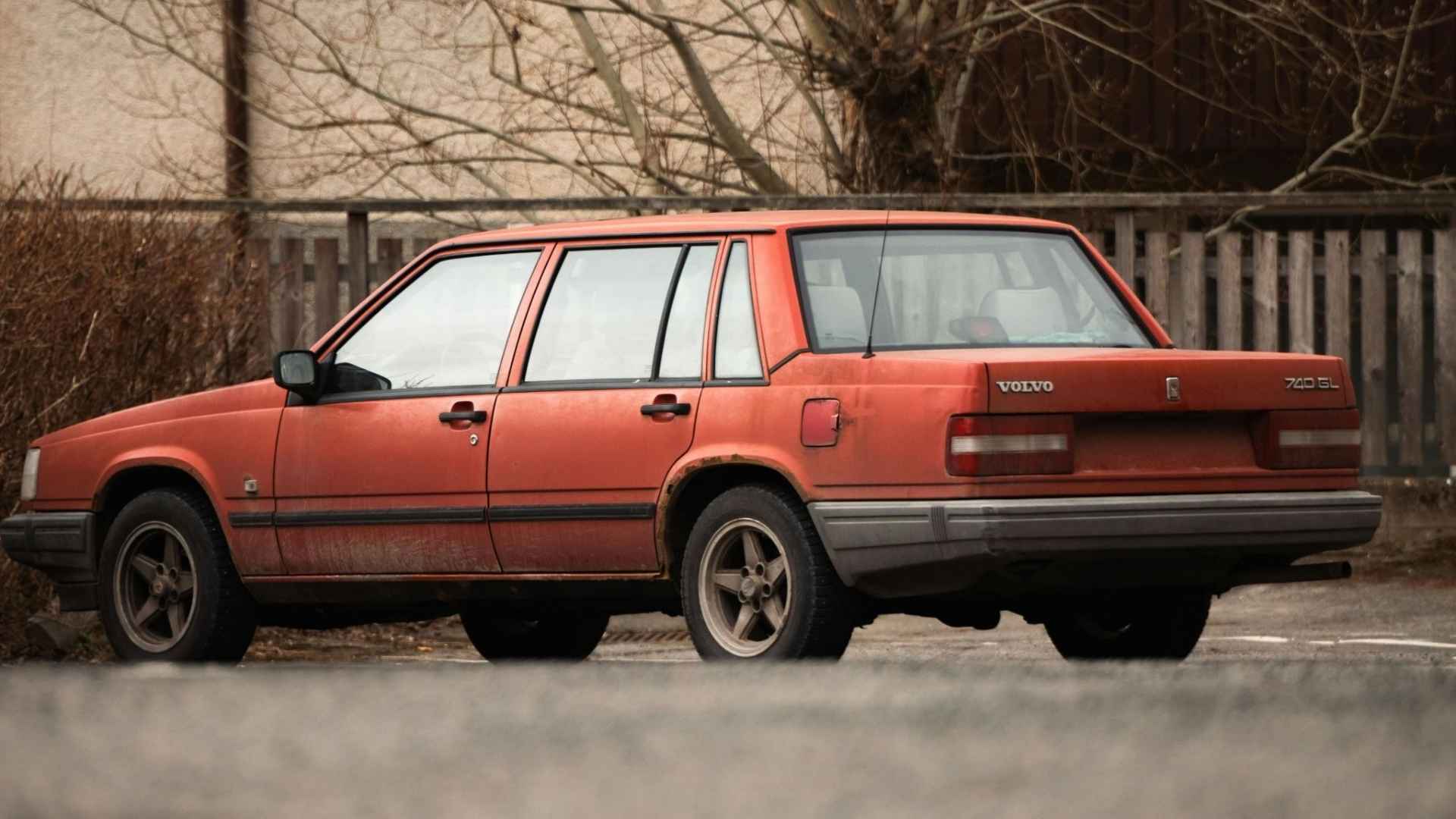
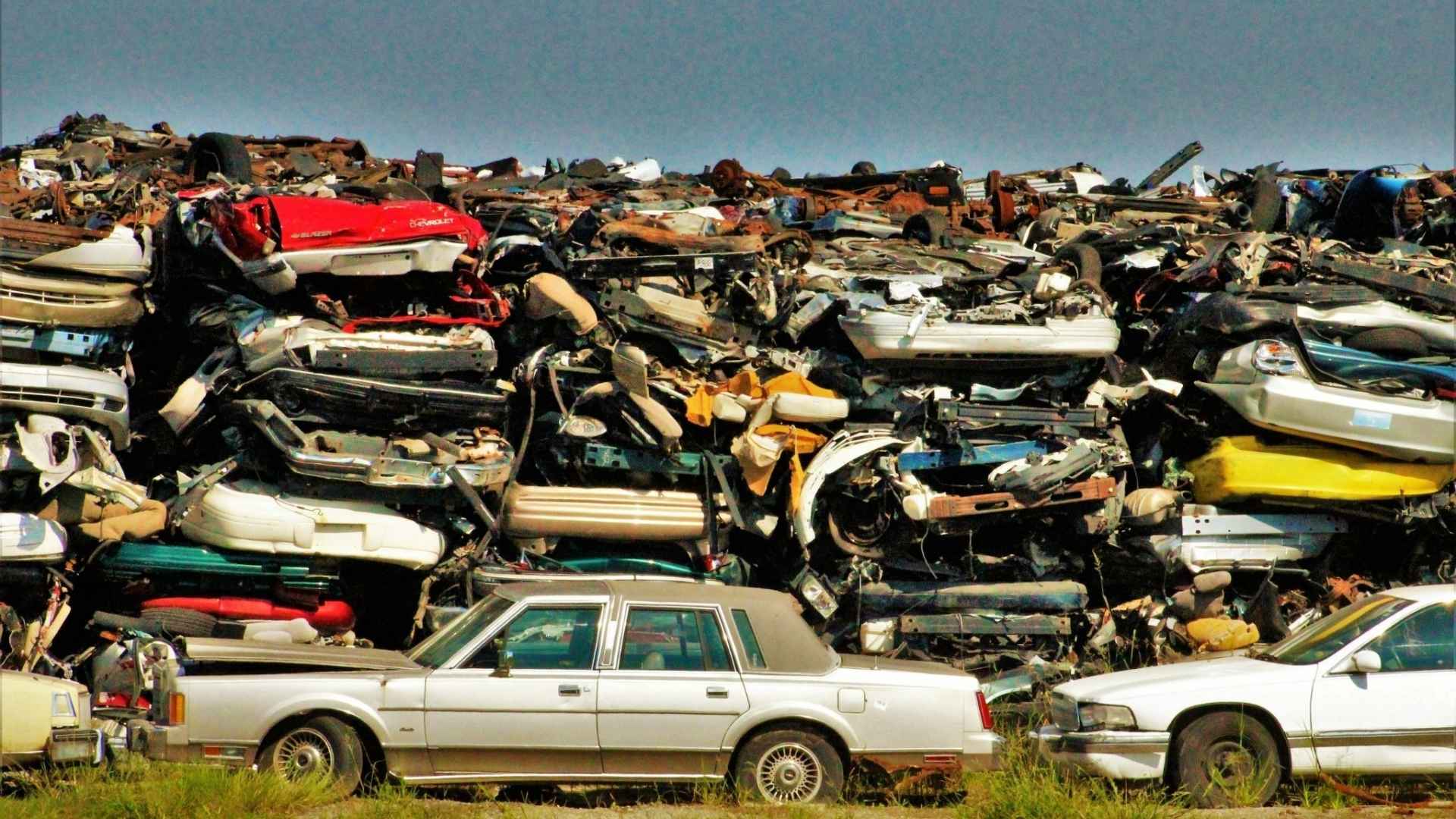
Even a car with a failed engine, collision damage, or major mechanical problems may contain recyclable metals and reusable components.
This guide shows you how to estimate the material value, understand what affects a buyer's offer, and compare what you could actually receive.
What Is Car Scrap Value?
Car scrap value is the estimated worth of a vehicle's recoverable materials, primarily metals such as steel, iron, and aluminum. It is different from what someone might pay for the vehicle as a whole.
An engine, transmission, catalytic converter, or other usable component can influence a buyer's offer, but that potential parts value is not necessarily included in a basic metal-only calculation.
Scrap-Metal Value
Estimated value of the recoverable materials in a vehicle, based on material quantities and applicable buying rates.
Junk-Car Value
What a buyer may offer for the whole vehicle, taking parts, materials, condition, demand, and costs into account.
Resale Value
What a private buyer might pay to drive, repair, or restore the vehicle rather than dismantle it.
Key distinction: A car's scrap-metal calculation is not a guaranteed purchase price. For factors that affect a complete vehicle's offer, read our guide to junk-car value.


How to Calculate Your Car's Scrap Value
The basic method is to estimate the amount of each recoverable metal and multiply it by the appropriate buying rate. The results can then be added together.
Many recyclers use whole-car scrap classifications instead of purchasing every metal separately. The calculation below is therefore an educational estimate, not a substitute for an actual quote.
Find Your Vehicle's Curb Weight
Look up the curb weight in the manufacturer's specifications or owner's manual. Use the correct model year, engine, trim, and drivetrain whenever possible.
Curb weight generally includes standard equipment and operating fluids but excludes passengers and cargo. It is not the same as gross vehicle weight rating (GVWR).
Important: Curb weight includes glass, rubber, plastics, fluids, and other nonmetal materials. Do not treat the entire weight as recoverable steel.
Estimate Recoverable Materials
Most passenger vehicles contain substantial ferrous metal along with smaller amounts of aluminum, copper, and other materials.
Composition varies by vehicle design. Without a documented material breakdown, estimates are approximate. A yard may value the complete car as a scrap grade instead of assessing every material individually.
Check Local Scrap Buying Rates
Scrap prices vary by material grade, buyer, market conditions, and location. Ask recyclers how they classify complete vehicles and whether their rates are based on accepted weight or a vehicle category.
The U.S. Geological Survey's Mineral Commodity Summaries provide national market background, not a local vehicle purchase quote.
Compare consistent units: one U.S. short ton equals 2,000 pounds, while a metric tonne is approximately 2,205 pounds.
Calculate the Estimated Value
Multiply estimated recoverable weight by the corresponding buying rate for each material, then add the results.
Actual offers can differ because of grading, processing expenses, reusable parts, vehicle accessibility, transportation, and buyer demand.
Material recovery matters: A car's curb weight cannot simply be multiplied by a single steel rate. The EPA's end-of-life vehicle guide explains aspects of vehicle processing and materials handling.
Example: Calculating a Car's Scrap Value
Consider a fictional 3,200-pound vehicle. For this example only, suppose an assessor estimates 2,000 pounds of recoverable ferrous metal, 150 pounds of recoverable aluminum, and 20 pounds of separated recoverable copper.
Illustrative material calculation
The weights and rates are hypothetical teaching inputs, not current scrap prices, national averages, or ByeCar transaction figures.
| Material | Weight | Rate / lb | Value |
|---|---|---|---|
| Ferrous metal | 2,000 lb | $0.08 | $160 |
| Aluminum | 150 lb | $0.40 | $60 |
| Separated copper | 20 lb | $1.50 | $30 |
| Theoretical material value | $250 | ||
The fictional calculation produces a theoretical $250 material value. It does not establish what a scrapyard would offer. Nonmetal materials, recovery losses, material grading, processing costs, and other factors are not fully represented.
Why the Highest Headline Offer Isn't Always Best
Consider two additional hypothetical offers for the same complete vehicle.
These offers are also fictional. They demonstrate why net proceeds are more useful than comparing headline offers alone.
What Affects a Car's Scrap Value?
Two vehicles with similar curb weights can attract different purchase offers. Reusable parts, missing equipment, material composition, location, and transaction costs all contribute.
Weight & Materials
A heavier car may contain more recoverable metal, but composition and accepted material grades also matter.
Engine & Transmission
Intact components may interest a dismantler. Their contribution depends on demand, condition, and recovery costs.
Catalytic Converter
Converter designs differ in recoverable precious-metal content. A missing converter may reduce a whole-car offer.
Damage & Missing Parts
Collision, fire, flooding, corrosion, and removed assemblies can affect what remains reusable or recyclable.
Location & Access
Regional demand, available processors, transportation distance, and vehicle accessibility can change the terms.
Title & Ownership
Documentation affects whether the transaction can proceed legally, although it doesn't change the metal inside the car.
Missing components? Read ByeCar's catalytic converter value study for historical context, or explore guidance for cars with blown engines and non-running vehicles. Historical converter data is not a current price guarantee.
Title rules and permitted alternatives differ by state. Do not assume a vehicle can be sold without a title or while a lien remains unresolved. Check the relevant motor vehicle agency and the buyer's requirements.
Scrap-Metal Value vs. a Junk-Car Buyer Offer
A scrap-metal estimate is based on recoverable materials. A whole-car offer is what a buyer is willing to pay for the complete vehicle under specific terms.
Reusable parts may influence that offer, but do not simply add advertised engine, transmission, or converter prices to a whole-car quote. The buyer may already account for recovery value, and retail part prices can include testing, warranties, and selling costs.
| Factor | Scrap-Metal Estimate | Whole-Car Offer |
|---|---|---|
| Valuation basis | Recoverable material and buying rates | Vehicle-specific buyer assessment |
| Reusable components | May be excluded | May affect the amount offered |
| Local market | Changes scrap buying rates | Changes demand and transaction costs |
| Collection | May be a separate expense | Depends on agreed terms |
| Final figure | Calculated estimate | Actual offer subject to conditions |
Neither approach automatically produces a higher payout. Compare actual offers, potential deductions, and what the seller receives.
For the transactional option, see ByeCar's cash for junk cars service.
What Information Do You Need to Estimate Your Car's Value?
You don't need to dismantle your vehicle to get an initial assessment. Start with accurate basic information and disclose known limitations.
- Year, make, model, and trim: Identify the correct vehicle and specifications.
- ZIP code: Establish the vehicle's location for regional valuation and collection considerations.
- Running condition: Explain whether the engine starts and whether the vehicle can move.
- Damage: Describe collisions, corrosion, flooding, fire, and major mechanical faults.
- Missing components: Identify removed engines, transmissions, converters, wheels, and other parts.
- Ownership paperwork: Describe the title and lien situation accurately.
- Pickup access: Mention restricted parking, blocked wheels, or other collection limitations.
Photographs can help communicate visible damage and missing parts. Removing components before requesting an offer may change what a buyer is willing to pay.
Should You Scrap or Sell Your Car?
Consider the vehicle's condition, what remains usable, your available time, and the net amount you could receive.
Consider this when metal recovery is the main source of value. Compare accepted grades, weight-based rates, and transportation expenses.
Consider this when usable parts or other factors may influence value. Check the complete offer and collection terms.
Consider this when another buyer may want to restore the vehicle. Allow for advertising, disclosure, negotiation, and time.
Consider this only if you have the skills, equipment, storage, and time to manage dismantling and eventual shell disposal.
Remember: Gross revenue from individually sold parts is not the same as net proceeds. Testing, removal, storage, returns, and disposal can consume time and money.
How to Compare Scrap Car Offers
A useful comparison looks at the final payment and transaction terms, not just the highest number mentioned initially.
Describe the Vehicle Honestly
Provide accurate details about damage, major mechanical faults, title status, and missing components.
Compare More Than One Buyer
Ask relevant scrap yards and whole-car buyers to evaluate the same condition and location details.
Understand Potential Adjustments
Ask whether the quoted amount may change if inspection reveals a different condition.
Confirm Collection and Payment
Establish pickup arrangements, seller-paid charges, payment method, and timing before accepting.
Check Ownership Requirements
Follow your state's applicable title-transfer, plate, lien, and seller-notification rules.
Prepare safely: Remove personal belongings and tell the buyer about leaks or hazardous conditions. Don't dismantle airbags or handle refrigerants or other hazardous materials without appropriate training and equipment. See the EPA's vehicle recycling and disposal guidance.
Find Out What Your Car May Be Worth
A calculation is a starting point. If you want to explore selling the vehicle as a whole, provide its year, make, model, ZIP code, and accurate condition details for an assessment.
Request a Vehicle Quote →Confirm the final offer, documentation, collection terms, and payment method before proceeding.
Frequently Asked Questions About Car Scrap Value
Answers to common questions about material value, missing components, regional rates, and vehicle ownership.
How much is a car worth in scrap by weight?
There is no universal price per pound for a complete vehicle. Buyers may use whole-car classifications, accepted weights, or material-specific rates. Curb weight is not equivalent to recoverable metal weight. Compare current rates and offers applicable to your location.
Can a car be worth more than its scrap-metal value?
Yes. A buyer may also consider reusable engines, transmissions, electronics, and other components. Their contribution depends on condition, demand, testing, and recovery costs. Additional value is not guaranteed.
Does a non-running car still have scrap value?
Usually, yes. Engine failure does not remove the recyclable materials from a vehicle. Missing components, damage, transportation requirements, and location can still change what a buyer offers.
Is a car worth less without a catalytic converter?
It can be. A missing converter removes a component with potential recoverable material value and may affect a whole-car quote. The difference depends on the vehicle, converter, and buyer.
Do scrap car prices change by location?
Yes. Scrap buying rates, local demand, transportation, available processors, and competition vary by location. Use offers relevant to your vehicle rather than assuming a single national rate.
Do I need a title to sell a car for scrap?
Ownership-document requirements depend on the state and transaction. Limited exceptions may exist, but not every vehicle can be transferred without a title. Check the state motor vehicle agency and buyer requirements. Outstanding liens or disputed ownership may prevent transfer until resolved.